
This is an idea I’ve seen floating around social media more and more lately. Namely, ‘if you want candid photos, be candid’. I’ve been breaking down what this means to me and how I can distill it into something that actually helps couples, without it sounding snarky or defensive.
Candid wedding photography has become one of the most requested styles among couples, especially those planning intimate celebrations or San Francisco City Hall weddings.
People are drawn to images that feel natural, relaxed, emotional, and alive. They want photographs that show them as their real selves rather than stiff, overly posed versions of who they think they should be. The intention is sincere and beautiful, but here’s the part that often gets overlooked: candid photos only work when couples behave in ways that allow candid moments to happen.
Many people say they want candid photos, but the moment a camera appears, they freeze, wait for precise instructions, and unintentionally shut down the very energy they’re hoping to capture. In other words, there’s a disconnect between the candid aesthetic couples want and the behaviors that actually support it.

Table of Contents
Understanding what “candid” really means
The word “candid” gets used constantly, but it doesn’t have one universal definition.
In modern wedding photography, it can describe several different approaches, and couples often assume their meaning is the obvious one. Most of the time, it isn’t. When someone says they ‘love candid images’, they may be picturing true documentary moments, relaxed portraits with gentle movement, slightly posed images that feel unposed, or simply photos where no one looks directly at the camera. All of these interpretations fall under the candid umbrella today, but they require different types of direction, preparation, and timeline considerations.
Most people don’t realize that even engagement sessions — which often look relaxed and candid in the final gallery — are structured experiences built around guidance. You’re choosing outfits, picking a location, meeting me at a planned time, and receiving direction throughout. None of that is documentary, but the images can still feel candid because the comfort and connection are real. It’s a good illustration of how the word “candid” has more to do with the feeling an image evokes than with the photographer being invisible.
True documentary candid moments happen when you’re absorbed in what’s unfolding and not thinking about the camera at all. (The truest meaning of candid photography, indeed, refers to moments captured when the subject had no knowledge they were being photographed).

These are the fleeting expressions and interactions that occur as you get ready, greet your guests, laugh during cocktail hour, or walk together after your ceremony.
Part of creating these documentary candids involves knowing when to step back and blend in. A good photographer moves quietly, positions themselves thoughtfully, and pays attention to the emotional temperature of a moment. When you stop noticing the camera during the natural flow of the day, authentic expressions tend to surface much more easily.
For couple portraits, however, most people are not actually imagining documentary candids. They’re imagining something more curated: photographs that feel relaxed, natural, and unforced, but still benefit from flattering light, a thoughtful composition, and some level of direction.
This blend of guidance and authenticity is the foundation of modern candid portraiture, though it isn’t always obvious at first glance.
Learn more about my approach to posing at the link below:
Because candid photography doesn’t have a single definition, it’s important for couples to clarify what they’re hoping for. Without this clarity, they can unintentionally hold expectations that don’t align with how candid portraits actually work.
When I’m clear on the version of candid you’re drawn to, I can shape your session in a way that supports it, rather than guessing or assuming.

Candid photography requires participation
Candid photography is not a passive experience where the photographer captures magic while you remain still and hope something natural appears on your face.
It requires interaction, movement, and engagement. The more you participate, the more your photos reflect genuine emotion and connection. This doesn’t mean you need to perform for the camera or come up with ideas on your own. It simply means being willing to interact with your partner in a real and present way.
During portraits, I guide you with prompts and direction that help you settle into the moment and soften any awkwardness you may feel. These prompts give you a starting point, and once you’re comfortable, your natural expressions take over.
This is where candid portraits come to life — through the small gestures and reactions that happen once the initial nervousness dissolves. When couples wait silently, statically, for step-by-step instructions or focus entirely on doing something “correctly,” they unintentionally block the candid energy that photographs so beautifully.
Candid images are created through collaboration, trust, and willingness to engage with the process. This reel below is slightly tongue-in-cheek, but it helps to highlight an extreme version of ‘someone that won’t relax, trust themselves as well as the photographer, and let something unfold without requiring total control:
Dialing up the energy when you know you’re being photographed
It can help to understand one quiet truth about wedding photography: most people are not used to being photographed, especially not during emotionally loaded moments. On a wedding day, that unfamiliarity can sometimes translate into going inward, becoming overly self-contained, or flattening your expressions without realizing it.
Candid-feeling photos tend to come from couples who allow themselves a little more range. More visible joy. Bigger reactions. Extra warmth in their expressions. Not because they’re pretending or performing something that isn’t real, but because they’re giving their real feelings room to show up on the outside.
Think of it less as “acting” and more as permission. Permission to smile more openly. To linger in a hug. To let laughter spill out instead of containing it. To move with intention rather than shrinking into yourself. When emotions are allowed to be legible, they translate more clearly through a still image.
Photography is inherently reductive. A camera captures a fraction of a second, stripped of sound, motion, and context. When energy is subtle or tightly held, it can read as neutral on camera even if the moment felt meaningful in real life. When energy is expressed outwardly, the photograph has something to work with.
This doesn’t mean exaggerating who you are or manufacturing moments. It means recognizing that your wedding day is one of the few times in life where being a little larger than normal is appropriate. The joy is already there. The photos benefit when you let it show.
Why candid photos often take more time than posed photos
A common misconception is that candid photography is faster because it appears spontaneous. I’ll often have couples that say ‘we’re looking for just some candid photos, rather than traditional posed portraiture’. In reality, you can expect a candid portrait session to take much longer than traditional posed portraits.
This is because classic, looking-at-the-camera portraits are relatively straightforward. It doesn’t take long to create a few flattering images of people smiling and looking into the lens.
These images are quick to create because they follow a predictable structure. I know exactly how to pose you, you know how to quickly smile and look over at the lens. I offer simple pointers on how to arrange your hands and shoulders, and how to move us efficiently from one setup to the next.
Candid portraits, however, unfold in the spaces before and after the “official” photo. They happen when the pressure momentarily lifts and you interact with each other naturally. They are unpredictable and spontaneous.
These in-between moments require enough breathing room for comfort to settle in. If your timeline is too tight, you’ll get efficient, well-executed portraits, but the candid warmth you’re envisioning won’t have time to develop. The candid aesthetic depends on relaxation, presence, and the absence of rush.
When couples allow for this in their schedule, the photographs reflect that ease.

This is also why it helps to be intentional about how many formal group portraits you schedule, especially if they’re happening after the ceremony. Formals are important — they’re often some of the most treasured images from the day — but packing in an excessive number leaves little room for anything spontaneous. When every minute is spoken for, candid moments struggle to take shape simply because there’s no time for them to breathe.
On a wedding day — which is usually filled with movement, questions, family needing your attention, and very little uninterrupted quiet, or the hustle and bustle of City Hall — it isn’t always easy for couples to drop immediately into a calm, connected mindset.
The wedding-day environment itself plays a major role in whether candid moments can appear. If your timeline is packed with consecutive groupings, rapid transitions, or a nonstop stream of people needing your attention, there’s very little space for you to actually sink into the moment. Candid photography thrives when you’re not being pulled in ten different directions, when you can take a breath, look at each other, and simply exist without feeling rushed.
Finding even a small window where the two of you can be present with each other makes an enormous difference. We need both space on the timeline and for you to be in the right headspace too. That space allows candid expressions to surface naturally, rather than feeling rushed or pulled in multiple directions.
One of the most practical ways to support this is having a planner or coordinator who absorbs the logistical pressures of the day. When you’re not the point person for every question, timeline decision, or minor crisis, it frees you to be present. And presence, more than anything else, is what allows candid photographs to unfold. The fewer responsibilities you’re juggling, the more space there is for genuine connection to show up on camera, and of course, with your guests.

What it looks like to behave candidly during portraits
Candid portraits work beautifully when you allow yourself to connect with your partner in ways that feel familiar and genuine. This can be as simple as walking together while talking, leaning in close, sharing a memory, or adjusting each other’s clothing because that small act brings you physically nearer. These interactions create expressions that feel unforced because they truly are.
Find out more about what being a wedding photojournalist means to me at the link below:
I guide these moments so you’re never left wondering what to do or how to move. The direction is light and grounded in what feels comfortable for you. Once you have a starting point, your natural chemistry takes over. The result is a set of portraits that feel relaxed and real, rather than rehearsed.
Here are a few examples of interactions that often lead to candid-feeling portraits:
- Walking together at a comfortable pace while having a natural conversation, ignoring the photographer
- Leaning into each other the way you instinctively do when sharing a close moment
- Adjusting clothing or hair because that small gesture softens your posture and expression
- Sharing a memory, story, or inside joke that sparks a real reaction
- Holding hands in a way that feels familiar rather than staged
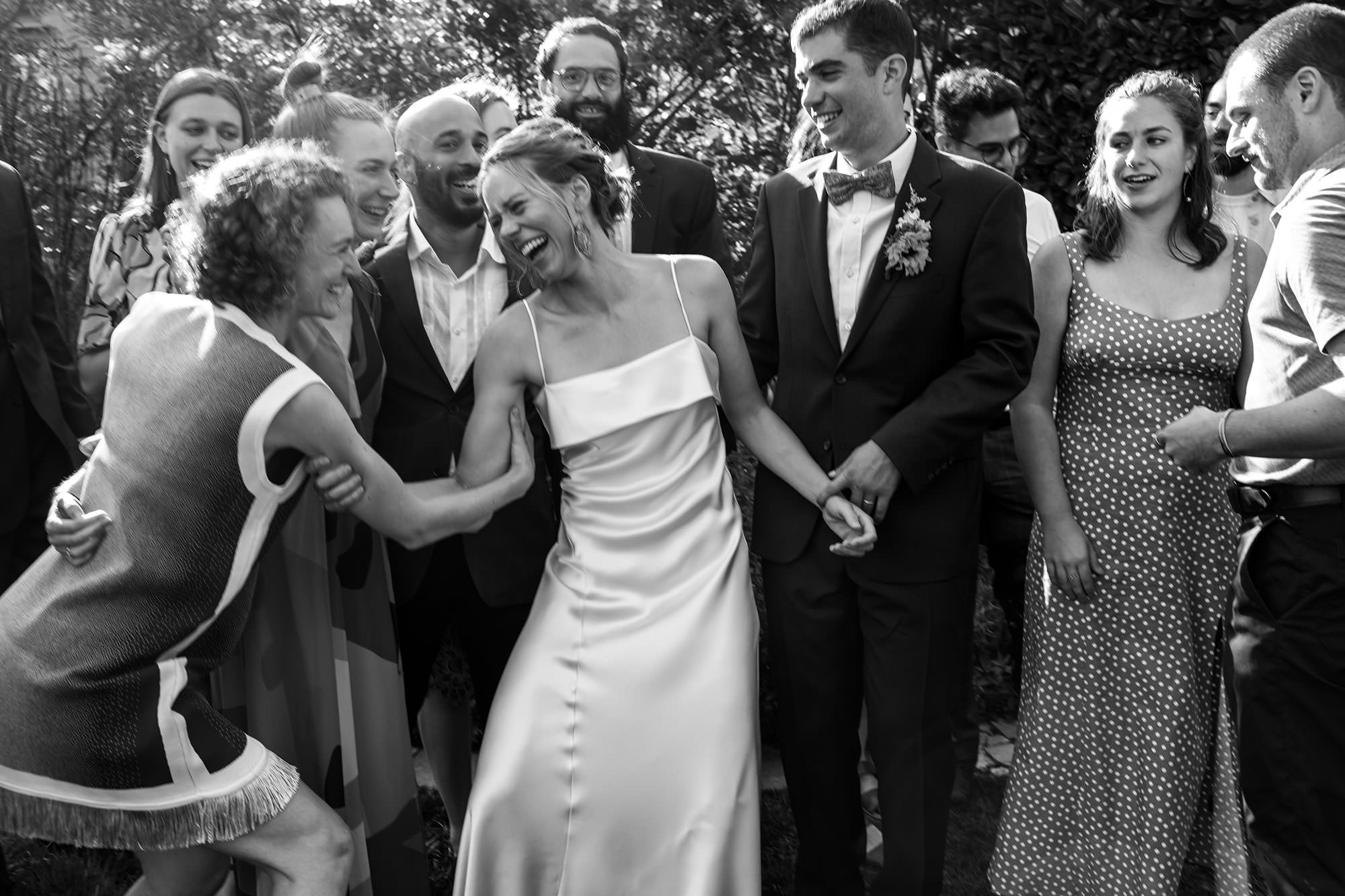
- Incorporating movement like bumping your bodies together or wrapping into each other’s arms as you can’t help but laugh and loosen up
- The moments after the ‘official’ pose is done, when you look at each other and laugh or smile with relief
Movement is one of the easiest ways to loosen up in front of the camera. When you’re walking, shifting your weight, touching your partner, or simply interacting the way you do in everyday life, you stop thinking about how you look and start behaving like yourselves again. That natural rhythm is what makes candid portraits feel alive.
These moments arise naturally when you’re given the space and direction to relax into who you already are together. It’s rarely a performance. Candids rarely happen in isolation. They’re almost always built on top of a foundation the photographer has already created. A little structure gives you something to respond to, and that response is where the authentic moment comes from.

When I guide you into a pose, that initial setup creates the chemistry and closeness needed for something more natural to unfold. Warm expressions, laughter, quiet tenderness usually appear in the transitions rather than the formal pose itself.
I always think of ‘candid photography’ – as much as it exists in wedding photography – as ‘in-between moments’. Those in-between moments are the reason candid photography benefits so much from gentle guidance rather than rigid posing or complete lack of direction.
Indeed, if you feel awkward in front of the camera (which all of my couples do, with only one exception who were actors!), you need more direction, not less. I believe this so strongly, I even wrote a whole manifesto about it, linked below!:
It’s not only couples who create these moments, either. Guests are often the source of some of the most memorable candid images: the reactions during speeches, the quiet comfort of a family member straightening your veil, the reunion hugs, the unfiltered joy on the dance floor. These are the moments you might not even see happening, but they contribute enormously to how the day felt and how fully your gallery reflects the experience.
So tell guests you have a wedding photographer that works candidly. They don’t need to freeze and pose whenever they see a camera pointed at them. They can relax and ignore the photographer, or just have some fun and be their full selves without putting on a facade. I have a more in-depth guide to what candid wedding photography actually means and involves.

Wedding photography is always a collaboration
Your photography experience, candid or otherwise, is shaped by what you bring to it. What you put into it is directly correlated with the outcome.
Wedding photography is not a service where you hire someone and step back entirely. It relies on communication, openness, and shared understanding.
The resources I send before the wedding are there to support you, to explain what works well and what tends to create challenges, and to help you prepare for an experience that feels effortless on the day itself. When couples read that information, communicate their preferences, and show up willing to engage, their photos reflect that level of connection.
The most meaningful candid photos come from the combination of your genuine presence and my direction behind the camera. When those two elements meet, the result is an experience that feels comfortable and a gallery that feels personal. If candid photography is important to you, lean into the process. Let yourself move, interact, laugh, and share real moments. When you do, the candid images you envisioned become possible — and they feel unmistakably like you.

Zoe Larkin
I’m Zoe, a wedding photographer based in San Francisco! My style is candid, capturing authentic moments for my couples all over the Bay Area and Northern California. Creating content is my passion! Follow along on the blog, Instagram, TikTok & YouTube!


Be the first to comment